I believe history deserves to be seen clearly. That is why I use AI technology to enhance old photographs, restoring their brilliance and making historical information more accessible and engaging for today's audience.
LOVE IS MY FORM - a Biographical Series On Sri Sathya Sai Baba
- Volume One - THE ADVENT (1926-1950), by R. Padmanaban
Beginnings
The first quarter of
the twentieth century marked a crucial phase in human history. The trauma of the First World
War had cast a spell of disillusionment in the West, where the brutal
exploitation of human and material resources clouded mankind's vision and
reason. Survival issues sorely tested familial ties, and evidence of love was
difficult to find. Man was desolate, stripped of faith in himself and in his
God. It was the most significant of times.
The East had fared a little better-especially India. Its glorious
heritage of spiritual awareness still glimmered through the ritual-laden social
fabric, but the vitality of life was gone. Yet, human destiny was scribbling
out its unique history in a remote valley of the Deccan peninsula-a part of the
world associated with many stories and legends. It was here, that a new
awakening was about to take place. It was here that humanity would be afforded
a new beginning ...
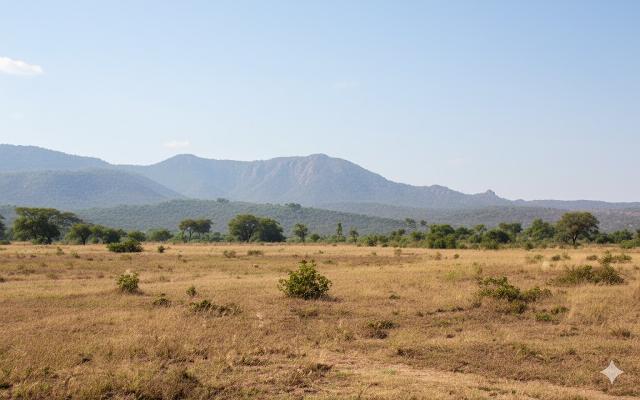
The wheel of Time rumbled slowly through the bullock cart tracks of Rayalaseema in the erstwhile Madras Presidency. Prosperity was the middle name of the proud gollas (cowherds) of the village named Gollapalli - which meant the village of cowherds-situated on the banks of the river Chitravathi. The gollas flourished on the rich produce of their milch cows.
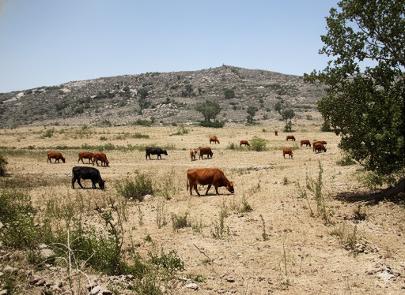
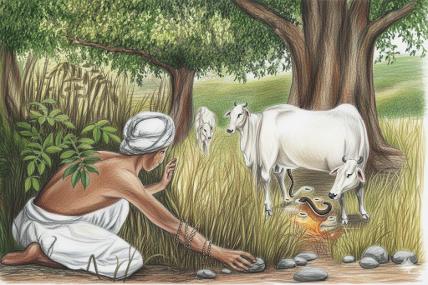
Tradition holds that one evening trouble started when a cow returned from the pastures with empty udders. The owner of the cow was outraged. The next morning, he secretly followed his cow, determined to discover the culprit who had robbed him of his precious milk.
The cow, unmindful of her prying master's presence, wended her way
through the green pastures skirted by gentle undulating hillocks, eventually
reaching the outskirts of the village. She stood next to an anthill and
waited-while the cowherd, hidden in the bushes, watched intently. He saw the
strangest sight: a cobra emerged from the anthill, placed house itself beneath
the cow, reached up to the cow's udder and began to drink her milk. The cow,
undisturbed, contentedly suckled the serpent, while the cowherd turned
indignant. He picked up a stone and with all his might hurled it at the
serpent. Mortally wounded, the cobra writhed in pain and let out a curse upon
all the gollas of Gollapalli: henceforth, anthills and the snakes that
inhabit them, would torment the village.
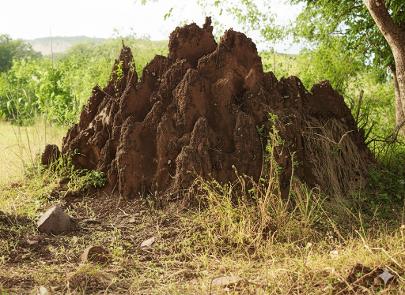
The snake died, but the villagers soon felt the effects of the terrible curse. Anthills popped up like mushrooms after rain.
The land gradually lost its lush vegetation and became red and rocky. Without pastures, the cattle population decreased alarmingly, and the cowherds diminished. Invaded by ants, the village soon became known as Puttavardhini, the village where anthills thrive. Still, the effects of the curse were far from over.
Puttavardhini continued to deteriorate, the very ants started dying and the ground became even rockier. In due course, the name of the village changed again from Puttavardhini to Puttaparthi, the village of anthills.
Following custom, the village elders unanimously counselled that the sin of murdering an innocent cobra must be atoned for. They decided to worship the stone supposed to be instrumental in the serpent's death and wash its gory stain with tears of sincere repentance. Nothing less would exonerate them and bring happiness back to their hearts and prosperity to their homes.
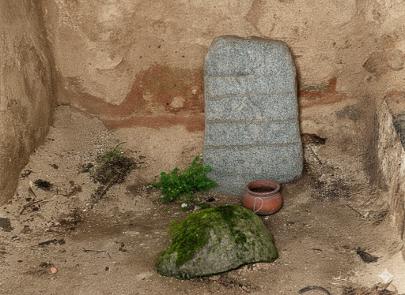
Accordingly, the fateful stone, with a blood-red streak on one side-perhaps symbolic of the fact that the blood of the serpent was still on the villager's hands was installed as the chief deity in a temple, which came to be known as Venugopalaswamy Temple.
Curiously enough, many years later, on the other side of the stone an image of Lord Krishna mysteriously manifested. The stone-turneddeity continues to be worshipped with the gory mark still visible on the reverse of the side that bears Lord Krishna's countenance.
The peasants of Puttaparthi were a God-fearing lot and devoutly
worshipped their village deity, Sathyamma. A small shrine, crude in
construction, was dedicated to her. Although the deity's name was Sathyamma,
the villagers had been calling her 'Sathyabhama,' after one of the consorts of
Krishna. Sometime afterwards, the village oracle-also called Sathyamma after
the village deity-revealed that if the cowherds were sent out of Puttaparthi,
the anthills (and consequently the snake mounds) would disappear. The Karnam
(headman) ordered a crier to proclaim that all the cowherds must leave the
village and go to a piece of land more than one hundred acres in area located
on the outskirts of Puttaparthi. Subsequently, following the oracle's
prediction, the snake mounds began to diminish.
Did the goddess Sathyabhama have plans of her own? That remained to be
seen.
In Puttaparthi there lived a devout, abstemious peasant, named Kondama
Raju of the Ratnakaram Raju family. The Raju family had long since abandoned
its militant Kshatriya role and taken up interpreting and popularising sacred
literature. Hence, they had the caste name Bhat Raju.
Kondama Raju had great musical and dramatic talent. He sang songs from
the Ramayana and played the role of Lakshmana in the village plays about Rama.
Kondama Raju was greatly revered by the villagers and often provided succor to
the distressed among them. He was also very intelligent and acted as one of the
three arbitrators in the village, helping to solve local problems-like those
related to land registration.
One night the goddess Sathyabhama appeared in Kondama Raju's dream. She
looked desolate and unsheltered, standing in a terrible rainstorm, waiting for
Her Lord (Krishna), whom She had sent to gather flowers. When the storm struck,
Kondama Raju was passing by, and Sathyabhama asked him for shelter. The moment
he woke up, Kondama Raju knew the significance of the dream and decided to have
a temple erected, dedicated to Sathyabhama. He succeeded in his resolve, and
Sathyabhama became the village deity.
Since the days of the renowned Sage Venkavadhuta, saintly ancestor and
family deity, this family was well known for its piety. Kondama Raju, imbued
with the family spirit, was inclined to simple living· and high thinking. He
was always in communion with Venkavadhuta. He is reported to have offered him
food and directly listened to him. Oral tradition holds that the divine would
incarnate, as Mother Earth was in deep distress.
Kondama Raju used to talk about the Avadhuta thus:
No face could ever be gloomy in his presence, for he was always jovial.
No door was ever closed as he passed by; everyone invited him in. People
everywhere claimed him as Kinsman, though he himself refused to accept such a
relationship or such ties with anyone. He was hungry when another was hungry in
his presence. He wore clothes only when they were wound around him and they
remained on him only until they fell off. He carried his body about as if it
[were] ... gossamer. The rains washed it; the sun dried it; sleep visited it as
it sat or stood and left it when it found itself unwelcome. His voice never
grated, and his eyes shone bright. When he laid his hand on the head of someone, that touch was a prelude to Paradise. He was a breeze, a cloud, a bird on
flight from earth to heaven. ... No one knew where he came from or where
indeed he went. He was here, there, anywhere, everywhere for more years than
any knew or could guess.
The physical body of the Avadhuta ‘...lies buried in the tomb at
Hussainpura in the Pavagada Taluk of the state of Karnataka, a few miles away
from the Andhra Pradesh border.’
Kondama Raju's pious wife, Lakshmamma, bore him two sons: Pedda Venkama
(Venkappa) Raju and Chinna Venkama (Venkappa) Raju - each, most likely, named
after the great Venkavadhuta. Both of them inherited their father's musical,
literary and dramatic capabilities, coupled with his piety and simplicity.
The two brothers, along with their nephews, the two sons of Kondama
Raju's brother, lived adjacent to each other and two houses away from the
Karnam house. Each of them had a small house with one or two rooms.
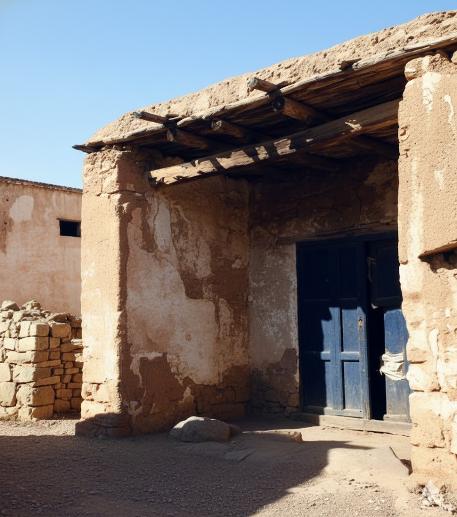
Pedda Venkama Raju's house was a simple one with stone walls. It had two rooms. One was used to store food grains while the other was used as the living room. Across a small passageway was the kitchen. A few wooden poles laid horizontally with a slight slope for regulating the flow of rainwater formed the roof. A few more poles supported it. A bamboo mat spread over the wooden frame and nailed to the walls, substituted for tiles. A plaster of lime and a bleaching agent, chavudu, was used as waterproofing material on the roof.
Kondama Raju's younger sister Venkata Subbamma married Meesaraganda Subba Raju of Kolimigundla, a village in the Koilkuntla Taluk of Kurnool district, Andhra Pradesh, then ruled by the Nizam of Hyderabad. They had six children - three sons and three daughters. Their eldest daughter was Easwaramma.
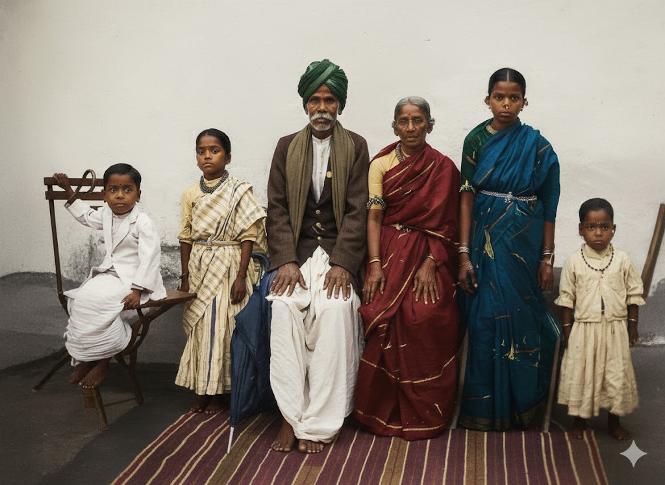
Family photo 1923, Pedda Narasa Raju, Venkamma, Kondama Raju, Lakshmamma, Narasamma and Parvathamma
Named after the family deity, Easwara (another name for Lord Shiva),
Easwaramma was born soon after her father Subba Raju, a great devotee of Lord
Shiva, constructed a Shiva Temple in his village. Kondama Raju agreed to accept
Easwaramma, as the bride of his first-born-Pedda Venkama Raju. She was only
about fourteen years old, when she entered the Raju household. Easwaramma won
the affection of her in-laws by servipg them with devotion, modesty and
enthusiastic performance of the family rituals. She would visit the Easwara
Temple on Mondays, the Sathyabhama Temple on Tuesdays and Fridays and the
Venugopalaswamy and Anjaneya (Hanuman) Temples on Saturdays.
Since highway robbers infested the Parlepalli forest close to
Kolimigundla, Easwaramma's parents and siblings lived in perpetual danger. Soon
after her marriage, Easwaramma's father passed away. Kondama Raju, Easwaramma's
uncle (and also father-in-law), persuaded his now-widowed sister, Venkata
Subbamma, to move to Karnatanagapalli, a village just across the river
Chitravathi from Puttaparthi.
Ratnakaram Chinna Venkama Raju was proficient in astrology and could
produce herbal medicines and talismans, in accordance with traditional methods.
As a dramatist, he organised a dramatic troupe 'Venugopala Naryamanda. 'Karnam
Gopal Rao, the son of the village headman would remember that every Friday,
Chinna Venkama Raju would give copper plates energized with 'Om Namasivaya' as
talismans, to those who came for cure of diseases or to release evil spirits
that possessed their bodies. Through his marriage to Venkatalakshmamma, Chinna
Venkama Raju was bountifully blessed. From this marriage, he had six children.
After his first wife died, he and his second wife, the generous and pious
Venkata Subbamma, were blessed with eight children.
Pedda Venkama Raju was a quiet, God-fearing man. Brought up in a strong
religious tradition, he was strict, but understanding, pious and simple. Though
ordinary in appearance, he exuded geniality and generosity. In music and drama,
he was remarkable. After Pedda Venkama Raju and Easwaramma were blessed with a
son and two daughters - Seshama Raju, Venkamma and Parvathamma, Easwaramma
suffered four miscarriages. The family attributed these to evil planetary
influences and consequently performed the Graha Santhi ritual (designed to
pacify the planets). Easwaramma, longing for another son, prayed to the village
Gods, conducting the propitious Sathyanarayana worship and keeping to a number
of vows requiring vigil and fasting. It was about time for Venkavadhuta's prophecies
to be fulfilled.
Not long afterwards, Easwaramma's mother-in-law, Lakshmamma, had a dream
that she could only decipher to mean auspicious for Easwaramma - perhaps the
gift of an extraordinary son. The blessing, she realised, was likely to come
through supernatural means, and so she warned Easwaramma not to be frightened,
if something unusual happened to her. And the unusual did happen.
Many years later Easwaramma was to recollect that one morning when she
had gone to the village well to draw water. As she prepared to draw up her
water-filled pot, she became aware of a strange blue glow. She was confused,
yet unafraid. Even as she stood transfixed, the warm glow of light transformed
itself into a luminous blue ball and softly glided deep into her being. Filled
with light and rapture, she fell unconscious near the well. Surely, this was no
common event.
Easwaramma told no one what had happened, except her mother-in-law, who
asked her to keep it a secret, lest people should spread stories.
Years later, Vengamma (1910-), Easwaramma's youngest sister, would
remember a similar, though different, acccmnt of this mystical experience: Pedda
Venkama Raju owned a few cows. One day, Easwaramma went to collect some grass
for the cows, from the fields across the Chitravathi River. It was hot and she
was very thirsty. She collected the grass, made it into a bundle and was returning across the
Chitravathi riverbed. She put the bundle aside and sat down to rest on the
riverbank. She dug a hole in the sand to get some water. Some dirty water
surfaced, which she threw away. She then scooped up some clear water with both
hands and was about to drink when she saw a luminescence merge into the surface
of the water and finally become a part of it. She did not know what to do, and
was very thirsty. Thinking of God and keeping faith in Him, she drank the
water. The luminescence was so powerful that, in spite of the glare of the hot
sun, she could still see it. She returned home and reported the incident to her
mother-in-law.
Shortly thereafter Easwaramma found herself 'expecting' again.
When the time of her delivery approached, several wondrous inexplicable
events begun to occur in the family of Pedda Venkama Raju. The house contained
several musical instruments for Pedda Venkama Raju's dramatic rehearsals. In
the middle of the night the tambura (a string instrument) would start twanging
on its own-as if being played by an invisible but dextrous hand-and the Maddala
(drum) would beat rhythmically, as if keeping time with the tambura. It was
also said that Kondama Raju heard the child talking when it was in the womb of
Easwaramma.
All these mysterious occurrences were to presage some extraordinary
event. The wise men of the village discussed the nature of these phenomena
unable to determine their portent, which only added more to their enigma. Pedda
Venkama Raju sought out a venerable sastri (scholar) in Bukkapatnam (a nearby
village), in whose wisdom he had faith. The sastri stated that these
occurrences were auspicious omens: they signified the presence of Shakti, a
beneficent power that would confer harmony and joy on the family.
The twenty-third day of November, in 1926, was still Karthika Somavara
(a Monday of the Holy Month of Karthika), in the year called Akshqya - the
'Never-declining, the Ever-full,' an occasion devoted to the worship of Lord
Shiva. That day was made even more auspicious by the coincidence of the
ascendant star of Ardra (Orion constellation) with the month and the day. Not
to miss the benefit of Shiva worship on such a rare heavenly confluence, the
villagers began chanting the names of the Almighty Lord from very early
morning.
Easwaramma, too, was performing the final part of her Sathyanarayana
worship, although her labour pains had begun. Nothing would distract the devout
lady from her religious vows. When the pains grew insistent, Lakshmamma, who
had gone to the priest's house at four in the morning, to carry out her
religious duties, was informed that her daughter-in-law would give birth any
moment. The messengers urged her to hurry home; but, determined in her piety,
she refused to be hurried. She sent word that she would come only after the
rituals were completed and would bring offerings sanctified by the ceremony,
for her daughter-in-law. Such was the pious old lady's faith in God: she was
certain that Easwaramma would give birth only after she arrived. Lakshmamma
finished the ritual and went home, bringing her daughter-in-law flowers and
consecrated water. Only then did Easwaramma give birth to a beautiful baby boy,
filling the entire family with delight.
Easwaramma spent her
confinement in her mother's house at Karnatanagapalli village. Her mother's
family maintains that Sathya was born there. Since the two families had always
been very close and resided in adjacent villages, it is quite possible that they
might have mistaken one for the other. Moreover, the flooding of the
Chitravathi made movement from one bank to the other a frequent affair. The
third day after the child was born, the family feared that the Chitravathi
River would flood, and Easwaramma moved to Puttaparthi with the child.
The baby was named Sathyanarayana, since Lakshmamma and Easwaramma were certain that the angelic child was the gift of Lord Sathyanarayana Himself, who had been pleased with their devotion and austerity.
Following the birth, miraculous events kept the Raju family enthralled. Once, as the new-born baby lay on a bed of piled clothes, they noticed that it was being raised and lowered by something underneath. Stunned, they watched anxiously.
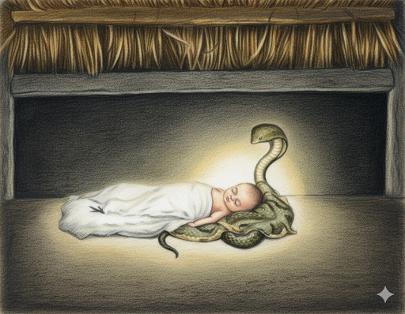
When at last they investigated, a cobra was found beneath the clothes,
though it seemed to harbor no ill intent towards the new-born infant. At
another time the non-vegetarian meal prepared for the relatives and friends in
the Raju household, miraculously turned into vegetarian food.
Venkamma, the eldest daughter of Easwaramma, would tell her captive
audience, years later, that she observed Sathya disappear, in a haze of light,
from his mother's lap and then reappear.
Many villagers reported that before the child was born, a beautiful girl
dressed in silk, decked with gold ornaments, was observed walking from the
Sathyabhama Temple into the house of Pedda Venkama Raju. Hence, they believed
the infant was Sathyabhama Herself.
Born in the wee hours of the day, the baby was charming beyond
description: with a little mole on the left cheek, a fold of flesh on the brow
and a cherubic smile, which lit up his softly radiant face. Dr. N. Jayalakshmi,
a long-time devotee of later years would recall:
I took with me a picture of Krishna, drawn by a famous artist, depicting
him squatting beside a pot of butter and eating the contents. It was a big
picture I had taken down from a calendar on the wall of my room. Easwaramma
looked on it and said, "Yes! His face shone like this, like the Moon. He
had the same black curly hair. His muscles were strong and well formed. His
brows were different from Krishna 's. They met in the Centre." Pointing to
the jewels that Krishna wore, she heaved a sigh, "But we were poor. We
could not afford to give him the jewels this child wears."
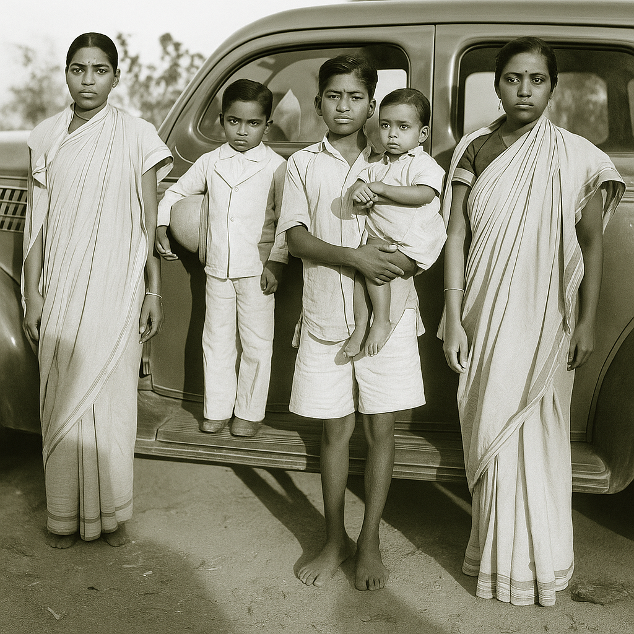
Sathya Sai (on the car's step) with His two older sisters - Venkamma (...–1993), Paravathamma (...–1996), older brother – Seshama Raju (1911-1985), and younger brother – Janakiram (1931-2003)
Planetary Position at the Time of Birth of Sathyanarayana Raju